Now Reading: Tecno Spark 20C Is This the Best Budget Phone for You
-
01
Tecno Spark 20C Is This the Best Budget Phone for You

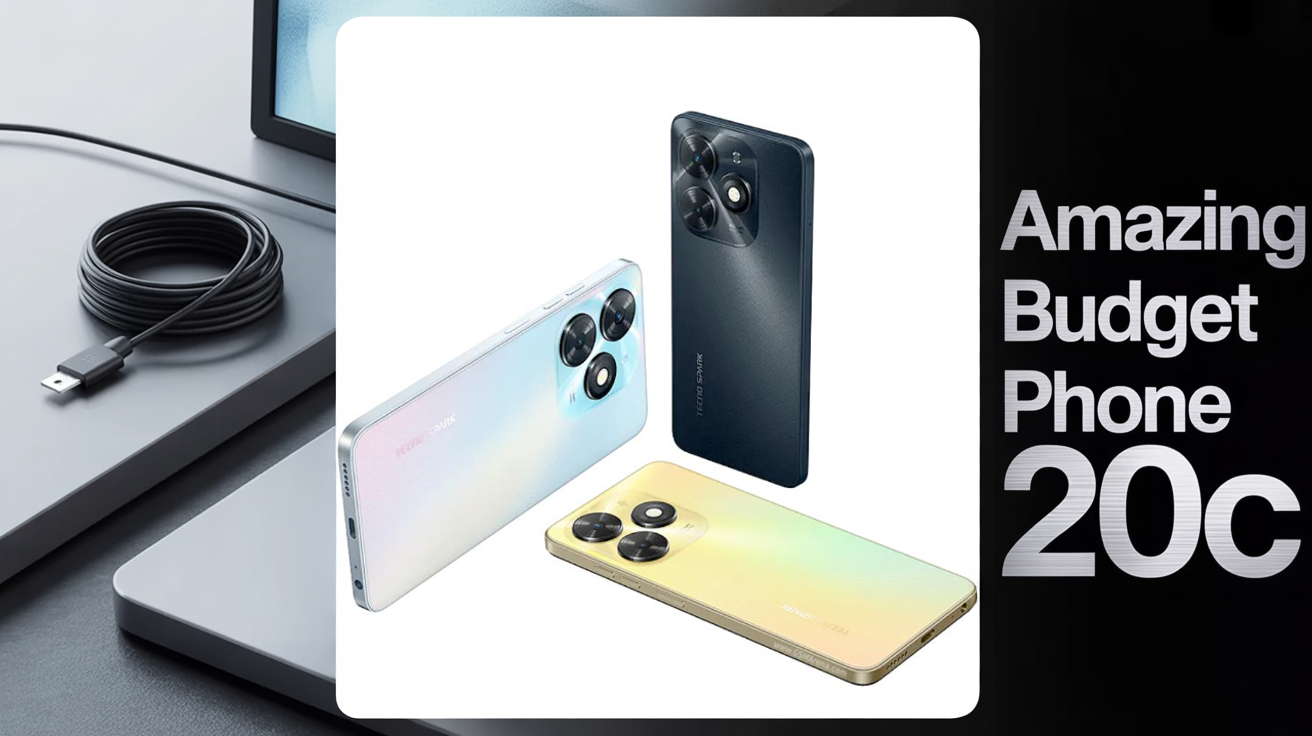

This is the Tecno Spark 20C. And for around €140, it comes with a list of promises that sounds almost too good to be true. You’re looking at a phone with a massive 6.6-inch, 90Hz display—something that was a flagship-only feature just a couple of years ago. It packs a 50-megapixel main camera that, on paper, should deliver some seriously detailed shots. It has a huge 5000mAh battery that promises to last all day and then some, stereo speakers, and it even includes an 18-watt fast charger right in the box.
It’s a spec sheet that screams “unbelievable deal.” But we’ve all been here before, right? We’ve seen budget phones with flashy marketing that fall apart the moment you actually start using them. So, the question is, is the Tecno Spark 20C any different? Is this a hidden gem in the crowded budget market, a phone that genuinely punches above its weight? Or is it just another cheap phone with promises it can’t keep?
There’s only one way to find out. We’re not just going to read the specs; we’re going to put this phone to the test. We’ll see how that 90Hz screen feels, put the 50MP camera through its paces, see how the processor handles daily tasks and games, and drain that battery to see if it lives up to the hype. By the end of this, we’ll know for sure if the Tecno Spark 20C is the best budget phone for you. Let’s get into it.
Unboxing and Design
Alright, let’s kick things off with the unboxing. In the budget world, this is often the first place companies cut corners—a flimsy box, almost no accessories, that whole routine. So, what’s the story here?
The box itself is your standard, sturdy Tecno packaging. Inside, you’re greeted by the phone. Let’s put that aside for a second and see what else is in here, because this is where it gets interesting. First up, you get a basic clear TPU case. Love to see it. Your phone is protected from day one. Next, the charging gear. You’ll find a USB Type-C cable, which is fantastic on a phone this affordable. We’re finally waving goodbye to micro-USB on budget phones. Alongside it is the charging brick itself, and it’s an 18-watt fast charger. A lot of expensive phones don’t even give you a charger anymore, so getting a fast one included here is a huge plus.
Now, keep in mind, accessories can sometimes vary by region, but our box also had a SIM tool and, in some markets, you might even get a pair of basic wired earphones. So, right out of the box, the Spark 20C is making a strong case for itself.
Okay, on to the phone. Peeling off the plastic, my first impression is… surprise. This does not feel like a €140 phone. It has a nice heft to it, giving it a feeling of solidity, not cheap hollowness. The model we have is the “Magic Skin” green, with a textured, faux-leather back. This is a brilliant move. It looks and feels surprisingly premium, it’s completely immune to fingerprints, and it gives you a really secure grip.
The frame is plastic, but it has that modern, flat-sided design that’s clearly taking a page from Apple’s recent design book. The camera bump also has that trendy iPhone-inspired three-ring look, though only two of those are functional cameras. For a lot of buyers, getting a phone that looks more expensive than it is is a huge win, and Tecno nailed it.
Let’s do a quick tour. On the right, you’ve got the volume rocker and the power button, which also houses a snappy, side-mounted fingerprint scanner. Perfect placement. On the left, the SIM tray holds two Nano-SIM cards AND a dedicated microSD card. That’s a massive feature—no choosing between a second line and more storage.
Down at the bottom, we have a fantastic lineup: the USB-C port, a microphone, a speaker grille, and yes, a 3.5mm headphone jack. A huge relief for anyone still using wired headphones. And up top? Another speaker grille. That’s right, the Tecno Spark 20C has stereo speakers, a feature that is incredibly rare at this price.
Even though it’s all plastic, the build feels robust. No creaks, no flex. It feels like it can handle daily life without a problem. It’s a large phone, for sure, but the design makes it manageable. Overall, the design and feel are genuinely impressive. It’s both good-looking and practical, punching way above its price tag.
Display
Alright, let’s talk about the display, because on paper, it’s a headline feature. We’re looking at a large 6.6-inch IPS LCD, but the star of the show is the 90Hz refresh rate. For years, budget phones were stuck at 60Hz, and this is an upgrade you can truly feel.
Let’s start there. The moment you start swiping around, the difference is obvious. Animations are smoother, scrolling is more fluid, and the whole phone just feels more responsive. It creates this perception of speed that elevates the entire experience. If you’re coming from an older 60Hz phone, it’ll feel like a massive upgrade. It’s one of those things that’s hard to go back from.
But a high refresh rate is only half the story. The other big spec is the resolution: 720 x 1612 pixels, or HD+. This is where you remember it’s a budget phone. Stretching a 720p resolution across a 6.6-inch screen gives you a pixel density of about 267 ppi. Is it a dealbreaker? For most people, probably not. For daily tasks like texting, social media, and watching videos, it’s perfectly fine.
But if you look closely, especially if you’re used to a 1080p screen, you’ll see the difference. Text isn’t quite as razor-sharp, and high-res images won’t look as crisp. It’s a classic trade-off: Tecno chose smoothness over sharpness. For the target audience, this was probably the right call. You feel the smoothness constantly, while the lower resolution is only noticeable if you’re really looking for it.
How about colors and brightness? It’s an IPS LCD, so colors are natural and pleasant, just without the punch of an OLED screen. Viewing angles are solid, too. Brightness is decent indoors, but it does struggle in direct, bright sunlight. You’ll have to crank it all the way up, and even then, it can be a bit hard to read. A common compromise at this price, and it’s manageable.
The display has a modern punch-hole cutout for the selfie camera, which looks much better than the old teardrop notches. Tecno also added a software feature called “Dynamic Port,” their take on Apple’s Dynamic Island, which shows things like charging status around the cutout. It’s a neat little software trick that adds a bit of flair, even if its functions are a little basic.
So, the verdict on the display? It’s all about smart compromises. Tecno correctly figured that a 90Hz refresh rate gives you a tangible benefit that makes the phone feel great to use. To hit that price, they sacrificed resolution and peak brightness. For €140, getting a big, fluid 90Hz display is a massive win that makes the phone feel more expensive than it is.
Performance
Alright, let’s talk about performance. This is where a budget phone can either shine or fall flat. The heart of the Spark 20C is the MediaTek Helio G36 processor. This is an entry-level, octa-core chip designed for basic tasks, not for hardcore gaming. It’s paired with either 4GB or 8GB of RAM; our unit has 4GB. Let’s be clear from the start: this is not a powerhouse.
So, how does it handle day-to-day use? For the basics, it’s surprisingly capable. Zipping around the interface, which feels great thanks to that 90Hz screen, is relatively smooth. Opening system apps like the dialer, messages, and settings is snappy enough.
When you move on to light multitasking, the experience is mostly acceptable, but you start to see the limits of the chip and the 4GB of RAM. You can have a few apps like WhatsApp, Spotify, and a couple of Chrome tabs open and switch between them without much drama. But if you start pushing it—say, a dozen Chrome tabs, music playing, and then trying to quickly open the camera—you’ll notice a bit of a delay as the phone catches up.
Scrolling through social media is mostly fine, but you’ll hit the occasional stutter, especially when heavy images or videos are loading. It’s not a dealbreaker, but it is a reminder that you’re using a budget device. Honestly, 4GB of RAM is about the bare minimum you’d want in 2025. The phone has a “Memory Fusion” feature, which uses storage as virtual RAM, but it’s no substitute for the real thing. If you have the option, go for the 8GB RAM model for a smoother experience.
For storage, the phone comes with a generous 128GB, and with that dedicated microSD card slot, you’ll have plenty of space. The storage type is likely eMMC 5.1, which is standard for this class. It means apps might load a tad slower than on pricier phones, but it’s perfectly fine for this price.
So, who is this for? The Spark 20C is perfect for someone with basic needs: calling, texting, heavy social media use, web browsing, and watching YouTube. For students, older users, or as a reliable backup phone, the Helio G36 gets the job done without much frustration.
But if you’re a power user who juggles dozens of apps or gets annoyed by minor stutters, this isn’t the phone for you. The processor just isn’t built for heavy workloads. For €140, the performance is fair. It’s reliable for its intended purpose and runs a modern version of Android without feeling painfully slow.
Alright, we’re halfway through our deep dive. We’ve covered the design, display, and daily performance. The all-important gaming and camera tests are coming up next. If you’re finding this review helpful so far, do me a huge favor: hit that subscribe button and turn on notifications. It really helps the channel out. Now, let’s see if this thing can play any games.
Gaming
Gaming is the ultimate stress test, especially for a budget phone, and it’s where they often fall on their face. The Spark 20C has the Helio G36, which we’ve already said isn’t built for performance. So, can it game? The short answer is: yes, but with some major asterisks.
First up, casual games like Subway Surfers or Candy Crush. The Spark 20C handles these perfectly. They aren’t demanding, and the phone runs them without any lag. The 90Hz screen even makes them feel extra smooth. If you’re a casual gamer, you’ll have a great time.
Now, let’s step it up to something more demanding but well-optimized, like Mobile Legends: Bang Bang. The good news is, it’s playable. At medium graphics settings, you’ll get a relatively stable frame rate. However, during intense team fights with tons of effects on screen, you will notice some frame drops. It’s not unplayable, but competitive players will feel the hardware holding them back.
Next, the big one: PUBG Mobile or Call of Duty Mobile. This is where the Helio G36 really starts to sweat. The game will automatically select the lowest possible graphics settings—Smooth graphics and Medium frame rate. You can’t push it any higher. Is it technically playable? Yes. You can run around and get into fights. But the experience is far from ideal.
The frame rate is choppy and inconsistent, especially in firefights or dense areas. This puts you at a huge disadvantage. Aiming is tough, and the whole thing can feel sluggish. The phone also gets noticeably warm. It’s a frustrating experience for anything more than a very casual match.
And finally, just for science, let’s try Genshin Impact. As you’d expect, it’s a slideshow. Even at the absolute lowest settings, the game is unplayable. The Helio G36 just doesn’t have the graphical horsepower for these top-tier games.
So, where does that leave us? The Tecno Spark 20C is not a gaming phone. It’s a phone that can play some games. It’s great for casual titles and can handle moderately demanding games if you’re not too serious. But for anyone looking to play popular, graphically intensive titles, this phone will be a major disappointment. If gaming is your priority, you’ll need to spend more money on a phone with a more powerful chip.
Cameras
The camera is one of Tecno’s big selling points, with “50MP” stamped on the back. But big numbers can be misleading, so let’s see what the quality is actually like. You get a 50-megapixel main sensor and a tiny 0.08-megapixel auxiliary lens that’s mostly there for show. On the front, there’s an 8-megapixel selfie camera with its own dual-LED flash.
Let’s start with the main camera in good lighting. By default, the camera takes 12.5-megapixel photos. In bright daylight, the Spark 20C can capture surprisingly good images for the price. They have a good amount of detail, and the colors are pleasing and vibrant, if a little oversaturated at times. The auto-HDR does a decent job of balancing bright skies and dark shadows.
You can shoot in the full 50-megapixel mode, which gives you more detail if you plan on cropping in. However, these files are larger, take longer to process, and the dynamic range is often worse. For most point-and-shoot situations, just stick to the default mode. The autofocus is reasonably quick in good light, which is a plus. For daylight shots, the Spark 20C is a capable performer that delivers social media-ready photos.
Now, low light. This is where budget phones almost always fall apart. As the light dims, the camera starts to struggle. Photos get softer, and a good amount of digital noise creeps in. There is a dedicated Night Mode, which helps by taking a longer exposure to brighten things up. It can pull more detail out of the shadows, but it also tends to make the image look a bit artificial and over-sharpened. It’s better than nothing, but don’t expect clean, crisp night shots.
What about the 8MP front camera? It’s decent in good light, perfectly fine for social media selfies. Portrait mode works on both front and back cameras and does an okay job, though edge detection around hair can be a bit messy. The killer feature here is the dual-LED flash on the front. This is a huge advantage for taking selfies in the dark, resulting in much brighter and clearer shots than most competitors. It’s a genuinely useful feature.
Finally, video. The Spark 20C records at 1080p and 30fps on both cameras. In good light, the quality is acceptable for casual clips. However, there is no image stabilization at all. This means any movement, even just walking, results in very shaky footage. You have to stand perfectly still. Audio quality is also just average. In short, the camera system is a mixed bag, but it’s strong for the price. It punches above its weight in daylight photos, even if the video is basic.
Battery Life and Charging
A phone is useless if it’s dead, and battery life is where budget phones often shine. The Spark 20C packs a massive 5000mAh battery, and combined with an efficient processor and lower-res screen, it should be a recipe for amazing endurance.
The short answer is: yes, the battery life is fantastic. For a moderate user, this is easily a two-day phone. Let’s say you unplug at 100% in the morning. After hours of social media, a couple of hours of YouTube, some music streaming, and maybe 30-45 minutes of gaming, you could easily go to bed with 40% or even 50% left. That’s incredible peace of mind.
For a light user, you could genuinely stretch this to three full days on a single charge. The combination of the big battery and the low-power Helio G36 chip works wonders. In a world where flagship phones often struggle to last a single day, the marathon stamina of the Spark 20C is a massive selling point.
When you finally do run out of juice, charging is also solid for this class. The phone supports 18W wired charging, and the charger is in the box. It’s not crazy fast, but it’s respectable. In our testing, a 30-minute charge gets you to about 30-35%. A full charge from zero takes just under two hours. That quick 30-minute top-up can give you hours of extra use, which is really practical.
There’s no wireless charging, but you wouldn’t expect it here. The combination of stellar, multi-day battery life and decent 18W charging makes the battery experience one of the Spark 20C’s biggest strengths. It’s a reliable workhorse that ends battery anxiety.
Software and Other Features
Hardware is only half the story; let’s talk about the software. The Spark 20C runs on HiOS 13, which is Tecno’s custom interface on top of Android 13. In the past, skins like this were often heavy and bloated, but HiOS has improved a lot.
The look and feel are modern and very customizable. Tecno has also baked in a lot of features, some of which are genuinely useful, like the “Dynamic Port” for notifications, gaming modes, and multitasking tools.
However, it’s not perfect. There’s a good amount of pre-installed bloatware. You can uninstall most of it, but it’s an annoying first step. The software also likes to send you notifications from its own apps, which you’ll want to disable. This is a common trade-off on budget phones, but it does detract from the experience.
On the plus side, the software runs smoothly enough on this hardware, and Tecno does provide updates.
Now for some other standout features. The side-mounted fingerprint scanner is fast and accurate. A quick tap and you’re in. But the other major feature is the stereo speakers. It’s almost unheard of to find a dual-speaker setup at this price. The sound is significantly louder and fuller than a single mono speaker. It’s not audiophile quality—it can get a bit tinny at max volume—but for watching videos or listening to a podcast, it’s a game-changer for this category.
And let’s not forget the basics: the 3.5mm headphone jack is here, you get dual-SIM support plus a separate microSD slot, and solid 4G LTE connectivity. There’s no 5G, but that’s an acceptable omission at this price. Some models even have NFC for contactless payments, but you’ll want to check for your specific region. These thoughtful hardware additions show that Tecno understands what budget users actually want: a practical, feature-complete device.
Price, Pros & Cons, and Conclusion
So after all that, let’s wrap this up and answer the big question: Is this the best budget phone for you? Let’s break it down with some pros and cons.
On the pro side, the list is long for a €140 phone. The value is incredible. The design looks and feels far more expensive than it is. The big 6.6-inch 90Hz display makes the phone feel smooth and responsive. The battery life is phenomenal—easily two days. You get an 18W fast charger in the box. The 50MP camera takes really nice photos in good daylight. And features like stereo speakers, a headphone jack, and a triple-card slot make for a remarkably complete package.
However, the cons are a direct result of that low price. The biggest weakness is performance. The Helio G36 processor is fine for basics but struggles with heavy multitasking and demanding games. The display, while smooth, is only a 720p panel, and the low resolution is noticeable. Outdoor brightness is also just okay. The camera drops off significantly in low light, and video has no stabilization. Finally, the software comes with some bloatware you’ll want to remove.
The Tecno Spark 20C is a masterclass in smart compromise. Tecno nailed the features that matter most to the average user: a premium design, a big smooth screen, and epic battery life. They sacrificed raw power and screen resolution to get there.
So, who is this phone for? If you’re a student, a parent buying a first phone, or anyone on a tight budget whose usage revolves around social media, videos, and casual photos, this phone is a fantastic option. It delivers a high-quality experience where it counts most, and the battery life is a feature everyone can appreciate. For these users, it is absolutely one of the best phones you can buy.
But it’s important to know who this phone is not for. If you’re a serious mobile gamer, a power user who juggles heavy apps, or someone who needs high-quality, stable video, you should look elsewhere. The processor is just too much of a bottleneck.
The Spark 20C isn’t trying to be a flagship killer. It’s trying to be the king of its price bracket. It over-delivers on design, battery, and core experience, while making understandable cuts in performance. For the right person, this isn’t just a good budget phone; it’s a brilliant one.
Conclusion
So there you have it, our deep dive into the Tecno Spark 20C. It’s a compelling package for the price. But what do you think? Are the compromises worth it for that incredible battery life and 90Hz display? Let me know your thoughts down in the comments. I read every single one and I’m genuinely curious to hear if this is a hit or miss for you.
Thank you so much for reading. If you found this content helpful, please give it a thumbs up and consider subscribing for more in-depth tech reviews. Until next time, stay connected.